

If you are planning to build a website in 2026, one question naturally comes to mind: how much should website design cost in 2026?
Let’s be honest for a second.
You do not want a random price. You want a website that actually works for your business.
A website in 2026 is not just an online brochure. It is:
- Your first impression for new customers
- Your salesperson working 24/7
- Your brand’s credibility check
- Your long-term growth asset
That is why many smart businesses focus on understanding what result-focused website design really looks like before investing in professional website design services that align with real business goals.
There is no single fixed price, and that is a good thing. Website cost depends on real goals, real users, and real business decisions.
To simplify everything, let’s use a clear and human framework: the four W’s and one H.
Quick Breakdown (4W + 1H)
- What kind of website you need (informational, business, ecommerce)
- Why the website exists (branding, leads, sales, credibility)
- Who the website is for (your target audience)
- When you need results (short-term launch or long-term growth)
- How much strategy, customization, and expertise is required
What Does Website Design Cost in 2026 Include?
Think of a website like a well-planned shop, not just a signboard.
A high-quality website in 2026 usually includes:
- Smart planning so users instantly understand where to go
- Smooth navigation that feels natural and effortless
- Brand-aligned visuals that create trust within seconds
- Mobile-first design because most users come from phones
- Fast loading speed to keep visitors from leaving
- Search-friendly structure so people can actually find you
When these pieces work together, your website does not just look good. It performs.
In 2026, a website is not just a visual asset. It is a working system for your business. A well-designed website usually includes:
- Clear planning and structure so visitors know exactly where to go
- User-friendly navigation that keeps people engaged instead of confused
- Brand-focused visual design using the right colors, fonts, and layouts
- Mobile responsiveness so the site works perfectly on all devices
- Fast loading speed to reduce bounce rate and improve experience
- SEO-ready structure that helps search engines understand your content
All of these elements work together to create a website that looks good and performs well.
Why Website Design Prices Vary in 2026
Website prices feel confusing because not all websites are built for the same job. Some websites only need to exist. Others need to work.
Here is what usually changes the price:
- The goal of the website (just information or real business results)
- The level of planning required before design starts
- The amount of testing done before launch
- The experience of the designer handling the project
A website designed to bring leads or sales requires deeper thinking than one made just to look present online. That difference is what you are really paying for.
Who Determines the Cost of a Website?
Both sides play a role when deciding how much website design should cost in 2026.
The designer or agency sets pricing based on skill level, experience, and workload. Freelancers usually charge less because they work independently. Agencies charge more because they involve multiple specialists such as designers, developers, and SEO experts.
The business owner also shapes the cost. Your goals, required features, number of pages, and future growth plans all influence the final price.
Clear expectations on both sides are essential. When goals are defined early, surprises are avoided later.
When Should You Invest More in Website Design?

Spending more on a website makes sense when it is doing serious work for your business.
You should invest more if:
- Your website is your main source of leads or inquiries
- You want to stand out in a competitive market
- Your brand needs to look professional and trustworthy
- You are planning long-term growth, not short-term presence
If your goal is only to test an idea or share basic information, a simpler and lower-cost website can still be a smart choice.
The real question is not how cheap you can go, but how effective your website needs to be.
Paying more for a website makes sense when it plays a serious role in your business. For example:
- Your website is your main source of leads or inquiries
- You want to build trust and authority in your market
- Your brand needs a professional online presence
- You plan to scale your business over time
If your website is only for testing an idea, sharing basic information, or running a small side project, a simpler and lower-cost option can be a smart move.
In the end, the right investment depends on your goals and timeline.
How Website Design Pricing Works in 2026
Website pricing usually depends on several key factors that directly affect the final cost:
- Number of pages
- Level of customization (template or custom design)
- Features such as forms, chat systems, or ecommerce
- SEO and performance optimization
- Estimated time and expertise required
Lower-cost websites are often built quickly and may skip important steps. Higher-priced websites take longer because design, testing, and strategy are carefully planned.
Types of Websites and Their Cost
Here is a simple table to help you quickly understand website pricing in 2026:
| Website Type | Best For | Estimated Cost (USD) |
| Basic informational website | Personal brands, portfolios | $300 – $800 |
| Business website (leads) | Small to medium businesses | $800 – $2,500 |
| Ecommerce website | Online stores | $1,500 – $5,000 |
| Custom / advanced website | Scalable businesses | $2,500+ |
Here is a realistic breakdown when asking how much should website design cost in 2026:
Basic informational website ($300 to $800)
Best for personal brands, portfolios, or small businesses. Usually template-based with minimal customization.
Business website for lead generation ($800 to $2,500)
Designed to build trust, improve user experience, and include basic SEO for better visibility.
Ecommerce website ($1,500 to $5,000)
Includes product management, secure payments, performance optimization, and scalability.
Custom or advanced website ($2,500 and above)
Built for specific business workflows, long-term growth, and advanced functionality.
Templates vs Custom Website Design
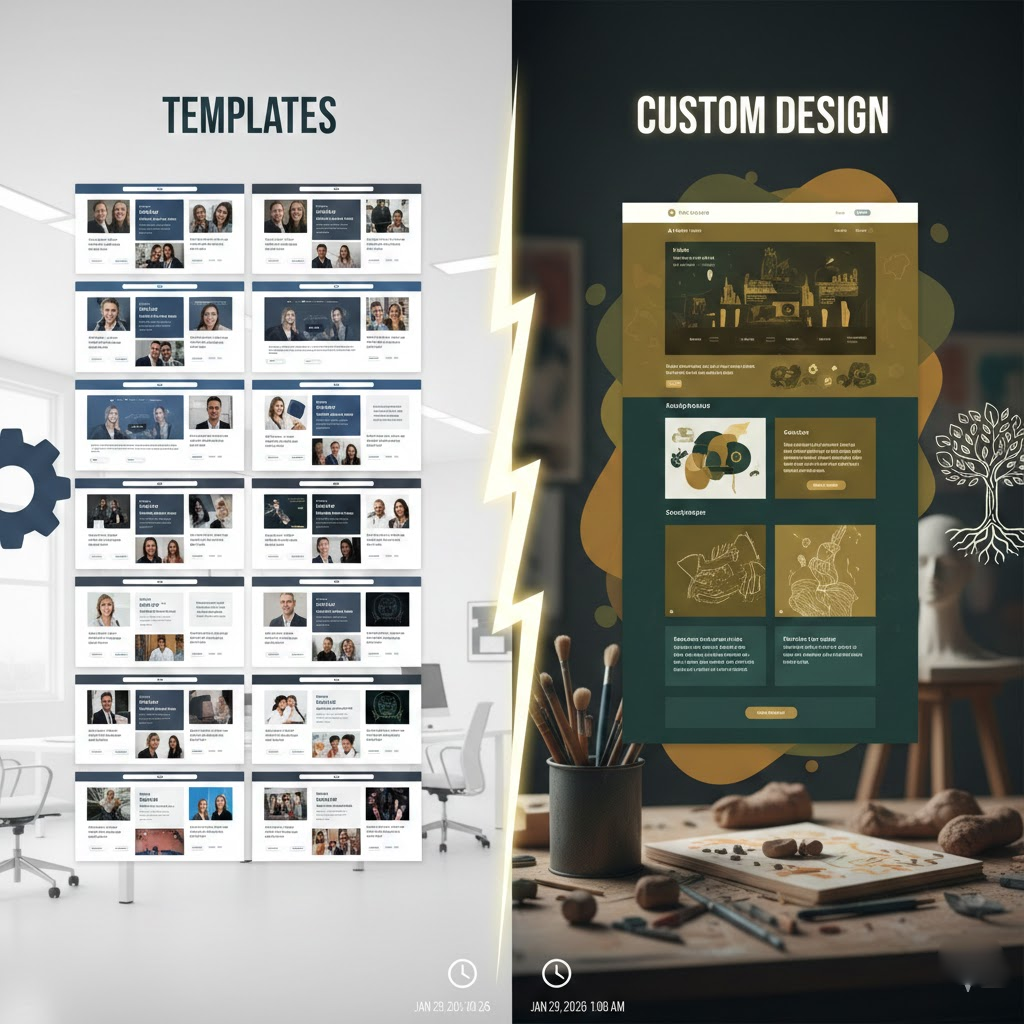
Infographic Opportunity:
A comparison infographic showing Template Website vs Custom Website works very well here. It can visually explain cost, flexibility, scalability, and branding impact.
Templates are not a bad choice. They save time and reduce costs, making them ideal for startups and small businesses.
However, as your business grows, templates can become limiting. Custom design becomes valuable when you need stronger branding, smoother user flow, flexibility to scale, and higher conversions.
Many businesses start with templates and later move to custom solutions as their business grows and their needs become more advanced.
Ongoing Website Costs You Should Consider
Website costs do not end after launch. Ongoing expenses include:
- Hosting and domain renewal
- Maintenance and security updates
- Speed and performance optimization
- Content updates
- SEO improvements
Ignoring these costs can reduce your website’s effectiveness over time, even if it looks good initially.
SEO and Website Performance in 2026
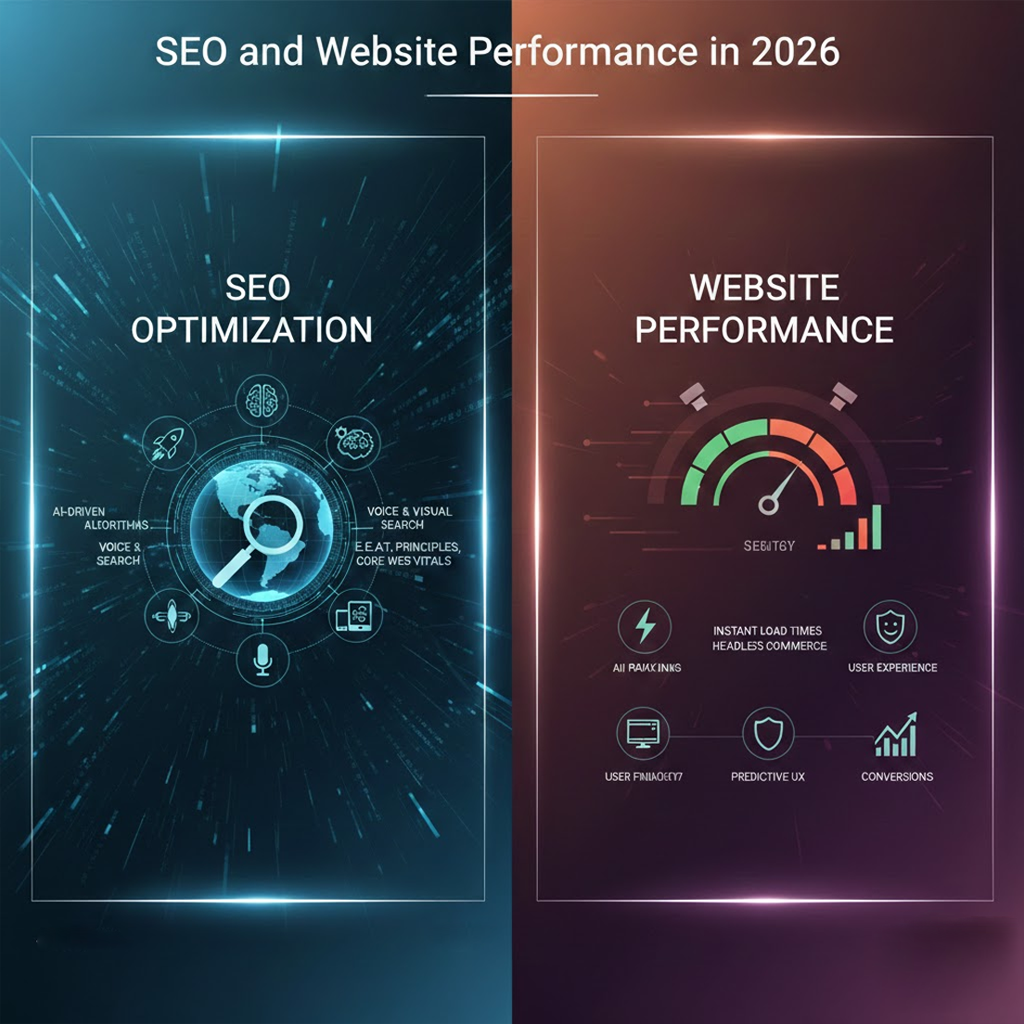
In 2026, SEO is part of website design, not an optional extra. Mobile responsiveness, clean code, fast loading speed, and structured content directly affect search rankings.
A website that ignores these factors may look good but fail to attract visitors or convert them into customers. This is why professional website design often costs more and delivers better long-term value.
Final Thoughts
So, how much should website design cost in 2026? The answer depends on a few honest questions:
- What is your website supposed to do?
- Why does your business need it?
- Who will use it the most?
- When do you expect real results?
- How much planning and strategy are you willing to invest?
A cheap website may look fine at first, but poor structure and weak design often lead to missed opportunities. A well-planned website, on the other hand, builds credibility, attracts the right audience, and supports long-term growth.
Frequently Asked Questions (FAQs)
How much does a basic website cost in 2026?
A basic informational website usually costs between $300 and $800, depending on design quality and setup.
Is website design a one-time cost?
No. Ongoing costs like hosting, maintenance, updates, and SEO should be planned for long-term success.
Should I choose a freelancer or an agency?
Freelancers are budget-friendly for small projects. Agencies are better for businesses that need strategy, scalability, and multiple services under one roof.
Does SEO affect website design cost?
Yes. SEO-friendly structure, speed optimization, and mobile responsiveness increase cost but improve long-term results.
Ready to Get Your Website Right in 2026?
Stop guessing. Stop comparing random prices. Start building a website that actually delivers results.
At Bicep Techsol, we do not just design websites. We help businesses:
- Look professional online
- Convert visitors into leads
- Grow with scalable design
- Avoid costly redesign mistakes
Whether you need a simple website, a business lead generator, or a full ecommerce platform, we guide you with honest pricing and clear strategy.
👉 Get clear pricing, smart strategy, and a website built for real results with our professional website design approach tailored to your business goals.

Leave A Comment